
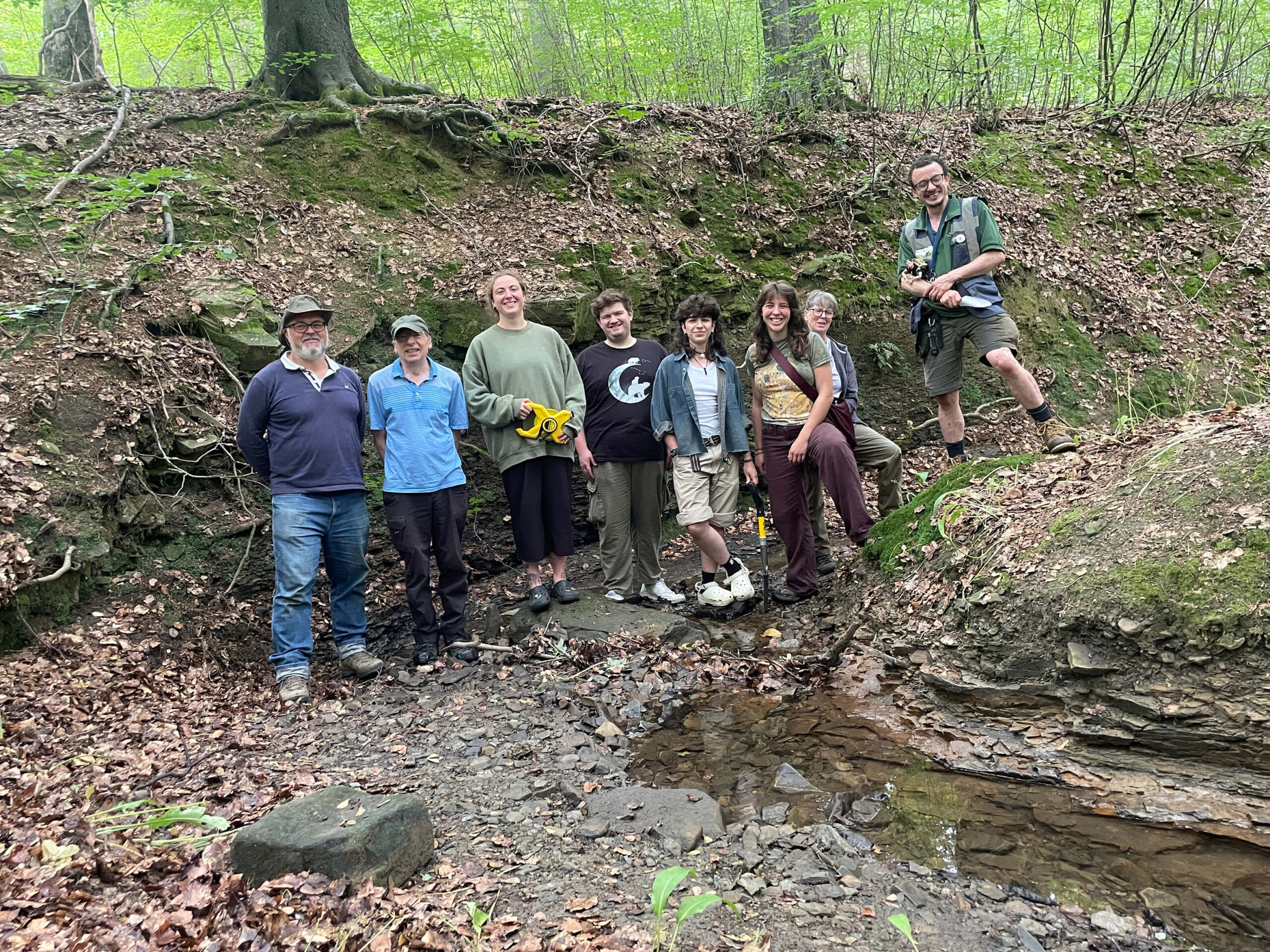
In early July Regather and the Gleadless Valley Wildlife Trust (GVWT) hosted a visit from Olivia van der Weiden and Erik van der Pol of Utrecht University’s Ecology & Biodiversity department, as part of the InNature project. Olivia and Erik came to Sheffield’s Gleadless Valley to collect soil samples and manage the installation of soil sensors at our project locations within Rollestone Wood. This is to record site conditions before, during and after our planned interventions over the course of three years. Which will provide quantitative data demonstrating the environmental impact of the InNature project. For more context please read previous blogs about this project:
From Housing to Habitats: A New Vision for Gleadless Valley
InNature Sheffield: habitat survey, 21st April 2026
InNature Sheffield, habitat survey – 11th May & 15th June 2026
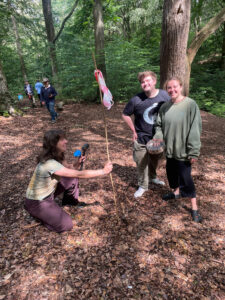
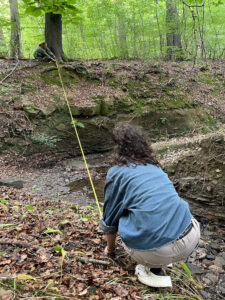
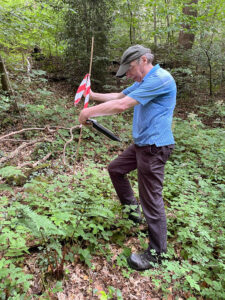
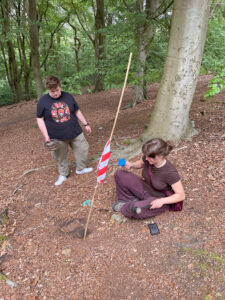
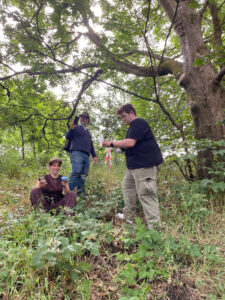
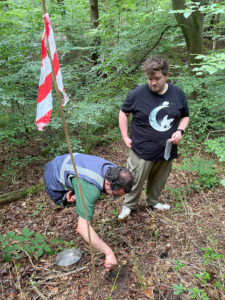
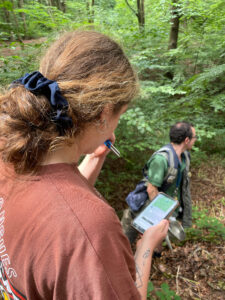
Across two days, 36 sensors were installed and 36 corresponding soil samples were collected. Half the sensors were installed on day one. Our first task was to establish the method for working together, with each team member assigned a role to streamline the process. Having already mapped the locations for the sensor installations, William of GVWT led the way taking a bamboo cane ‘flag’ to each spot. The rest of us followed after him, shouting out our positions as we clambered through the thick vegetation of the woodland understory.
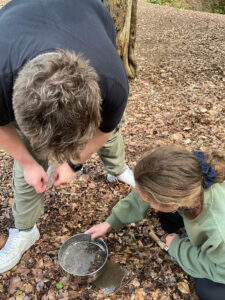
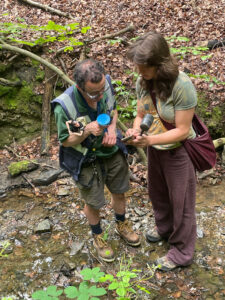
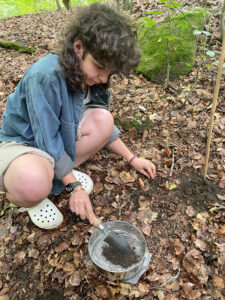
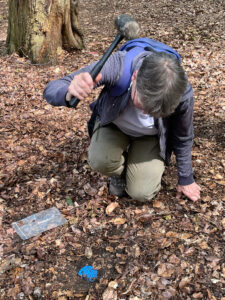
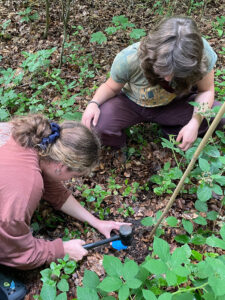
At each location Erik collected soil, digging a small amount out of the ground before sieving and bagging the sample. Olivia then gave the sensor a good shake to activate it; recorded its ID number, noted down by Fran; pinned the ID to the GPS map; and then hammered it into the ground.
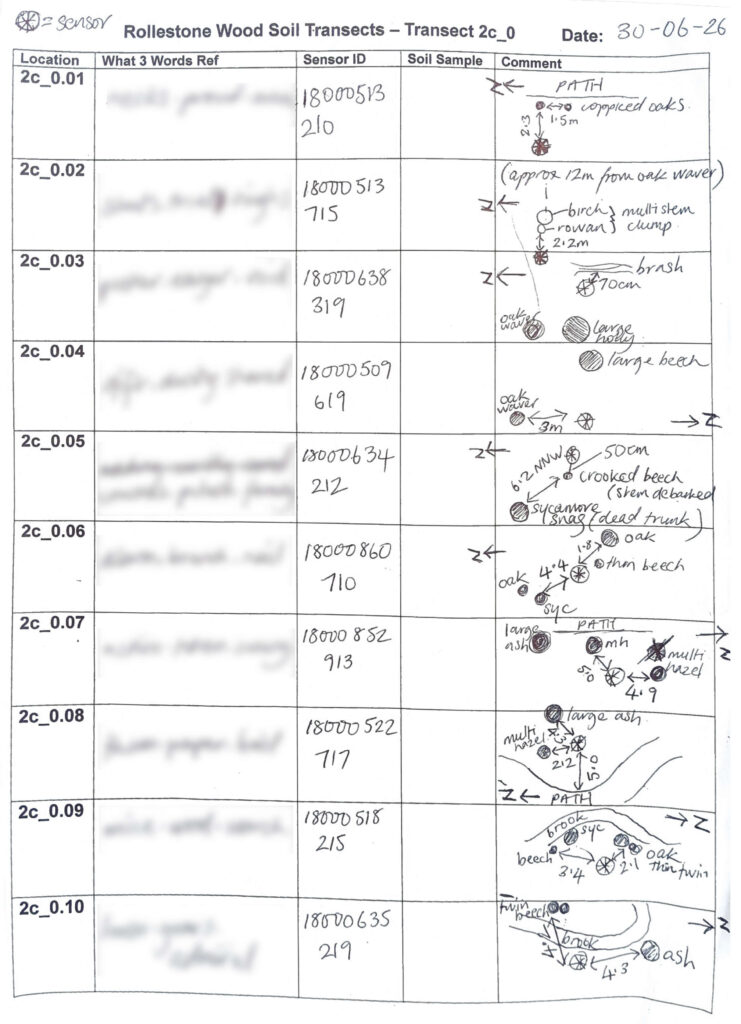
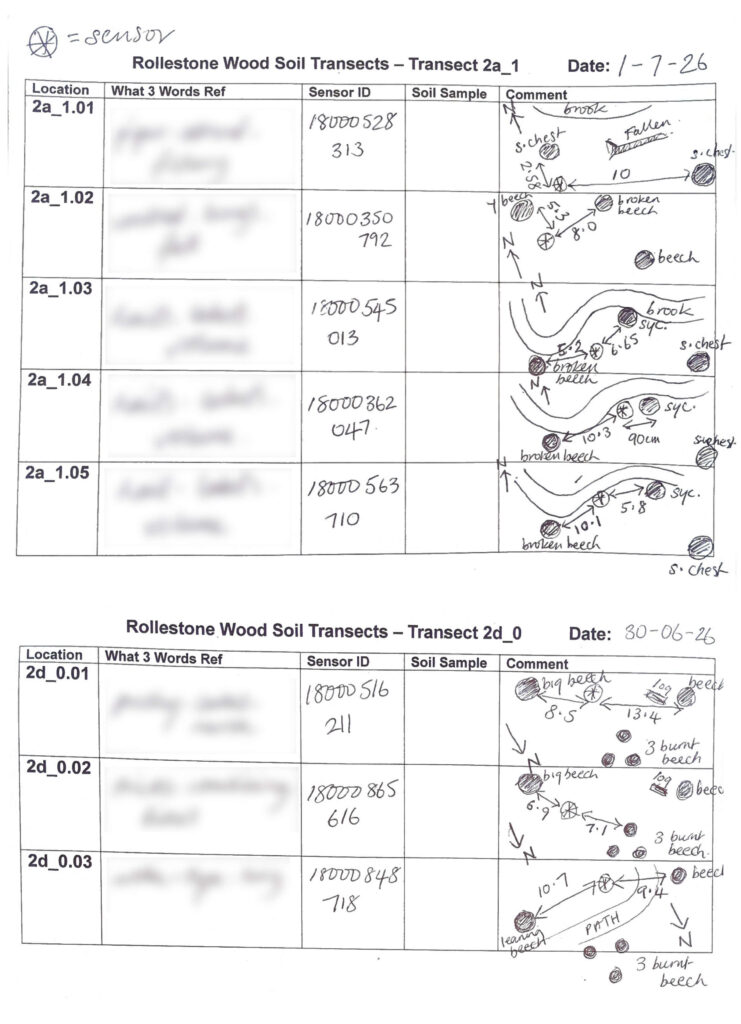
Sensor locations are not being published to ensure they remain safe and secure throughout the duration of the project. Because they are hidden from view, we are using a combination of methods to ensure that we can find them again. Besides each one being pinpointed using GPS, it was Gareth’s job to photograph each location and pass the what3words information to Fran, to log it the old fashioned way with pen and paper. Fran then triangulated the sensor’s position from nearby trees, drawing a small map for each one. Just in case all the above technological methods failed!
On the second day GVWT volunteers joined us for a fun and informative citizen science event. With expert input from Erik and Olivia, the volunteers repeated all the tasks the previous day’s team had performed. It was a great opportunity for the volunteers to ask questions about the methods being used, the data being collected and to be actively involved in the project at this foundational stage. This is the first of our other planned citizen events. The next one will be a Bioblitz at the Spotswood Meadow opening event on the 22nd August.
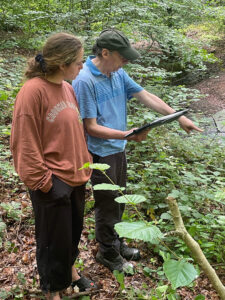
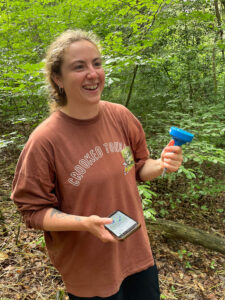
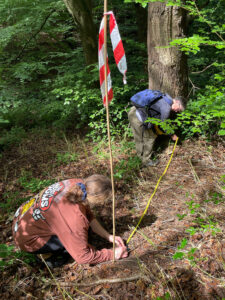
Four separate locations within Rollestone Woods are being monitored. Each transect, the path along which measurements are being taken, has between three and five sensors. With each point along the transect chosen to reflect a difference in habitat or microclimate e.g. drier soil upslope to wetter conditions along a watercourse.
First, the soil texture will be analysed to provide information on the current ground conditions and compared with the data coming in from the soil sensors. After which, the composition will be checked for the amount of soil carbon (organic and inorganic); the nitrogen, sulphur and phosphorus content; and the plant available cations (like calcium, magnesium and potassium). Lastly, the pH value; electrical conductivity; base saturation and exchangeable acidity will be studied to understand the soil’s physiochemistry.
The soil sensors measure the temperature at ground level every hour and the moisture at a depth of 15cm. The sensors link to a gateway installed on a nearby building. This receives the signals and then relays the data back to the university for collation and subsequent analysis.