

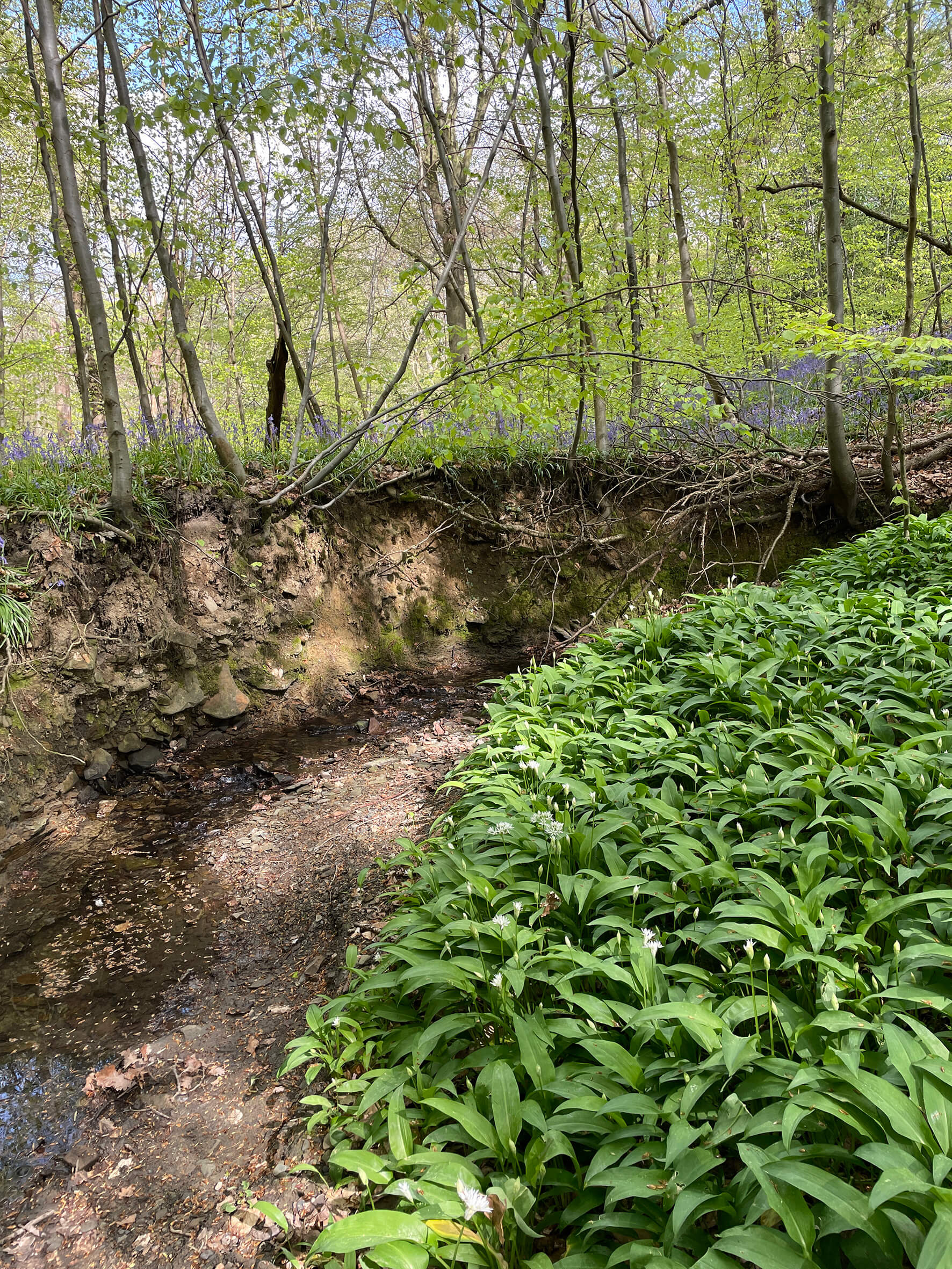
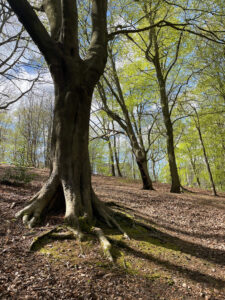
Common beech, Fagus sylvatica, has become dominant in parts of Rollestone Wood, an ancient woodland in the east of the the Gleadless Valley, Sheffield. Many areas within the wood were historically replanted with beech, which was was introduced here from southern England. It was planted for its timber value and because it grows more rapidly than sessile oak, Quercus petrea, the key tree species within this woodland. As a non-local species, beech competes with oak and other trees, limiting their capacity to regenerate. Beech is also incompatible with the ground flora that is key to the biodiversity of this ancient woodland. Its dense crown casts shade, its shallow root system takes up moisture and its leaf fall forms a persistent layer, lasting many years. All of which contrive to suppress the growth of woodland wildflowers.
Regather is lead delivery partner for the InNature project, a collaboration between Sheffield and multiple European universities. Regather is working with the Gleadless Valley Wildlife Trust (GVWT) to initiate Nature Based Solutions (NBS) to improve outcomes for both people and nature within the Gleadless Valley. The activities to be undertaken within the valley are part of an Eco Social Lab, based at Regather’s Habitat 181, which invites local people to participate in and benefit from NBS. This blog provides more background information on both the landscapes of the Gleadless Valley and why the InNature project is based here.
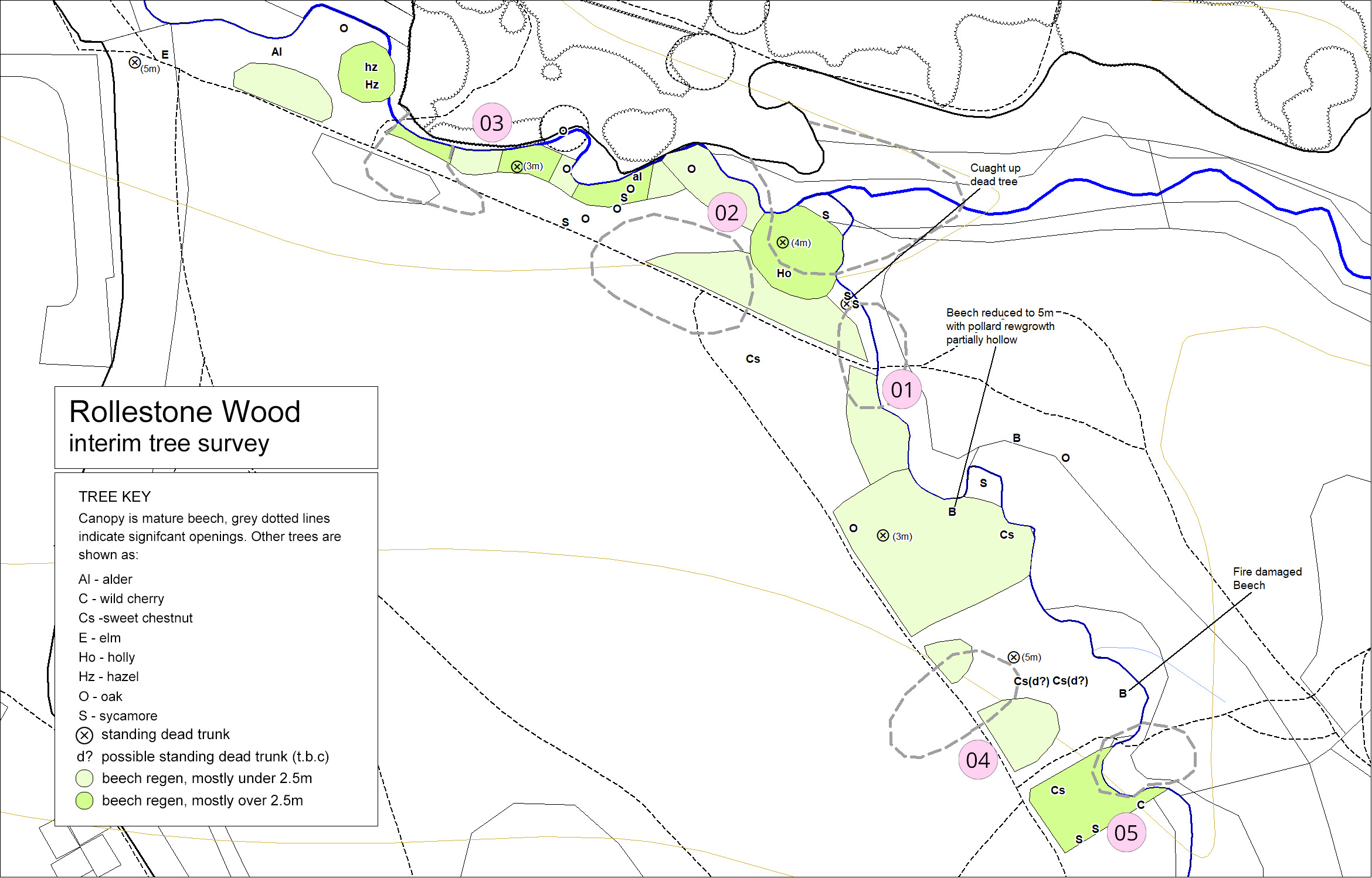
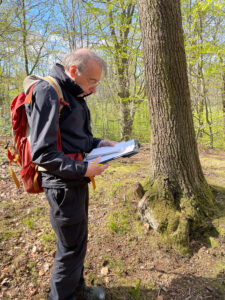
To understand which areas of the wood would most benefit from NBS interventions, the GVWT are surveying habitats within RW7. Along the stream corridor and within the central area. GVWT will work with community volunteers to carry out selective thinning of beech saplings and with the City Council to remove some carefully selected mature beech trees in parts of the wood. This will create openings in the tree canopy allowing more light to enable natural regeneration of both local trees and ground flora to take place. Enough mature trees will be retained to maintain the woodland environment. The same areas will be surveyed again at the end of the four-year project. The hope is that there will be visible changes indicating improved biodiversity where interventions have take place, compared with other areas where no work has taken place.
Ancient woodland soils contain a seed bank of plant species, some of which can remain dormant in the soil for up to 60 years. Seeds await an opportunity to germinate, when there is enough light and consistent moisture to ensure they can sprout and then grow into seedlings. Several of the key Ancient Woodland Indicator species for Sheffield are found in Rollestone Wood, including the following plants found within the survey area:
Surveyed areas visited on 21st April 2026
1) RW7 2a – stream corridor
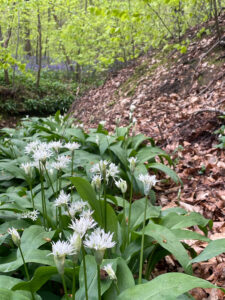
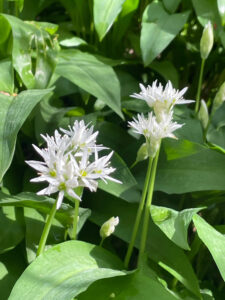
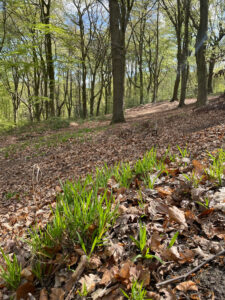
Clearing the beech upslope from the stream will allow wild garlic and English bluebells to recolonise bare ground. Wild garlic needs a damper soil, usually directly next to a watercourse. Bluebells prefer a moist but well drained soil, which is why the two species often grow in separate colonies. Where the banks are too steep for wild garlic and bluebells to grow, they are likely to be recolonised by liverworts and mosses.
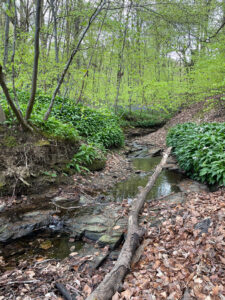
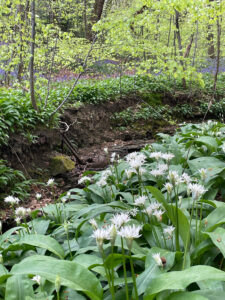
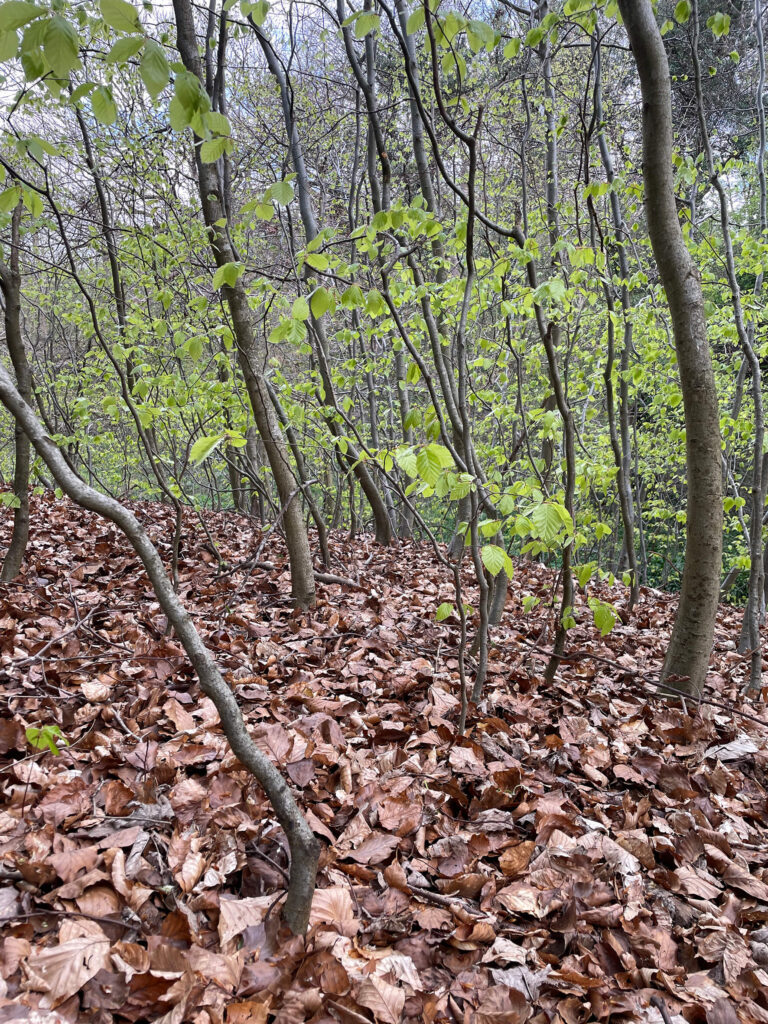
2) RW7 2a – stream corridor. Beech regeneration – trees over 2.5 tall.
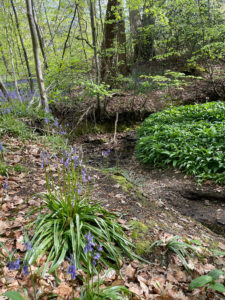
These beech saplings will be thinned with the help of community volunteers. Where the beech is dominant and is regenerating, the ground is bare aside from a carpet of beech leaves from previous years. Whereas on the other side of the stream, where beech is hardly present, lies a dense colony of bluebells. Illustrating the stark difference between an ecosystem in balance and one that has been disrupted by the introduction of a new tree species.
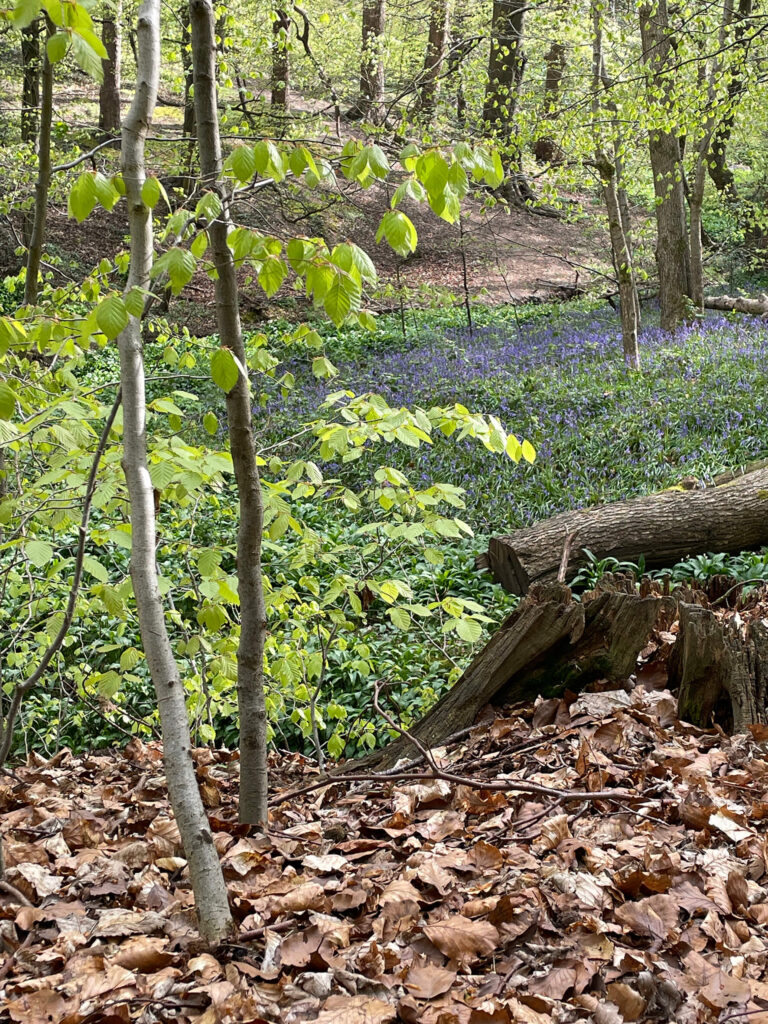
3) RW7 2a – stream corridor. Area of mature beech.
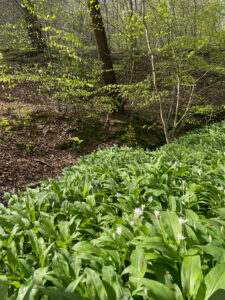
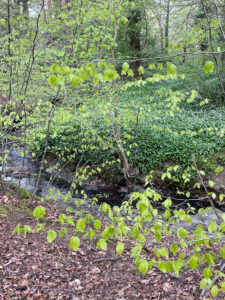
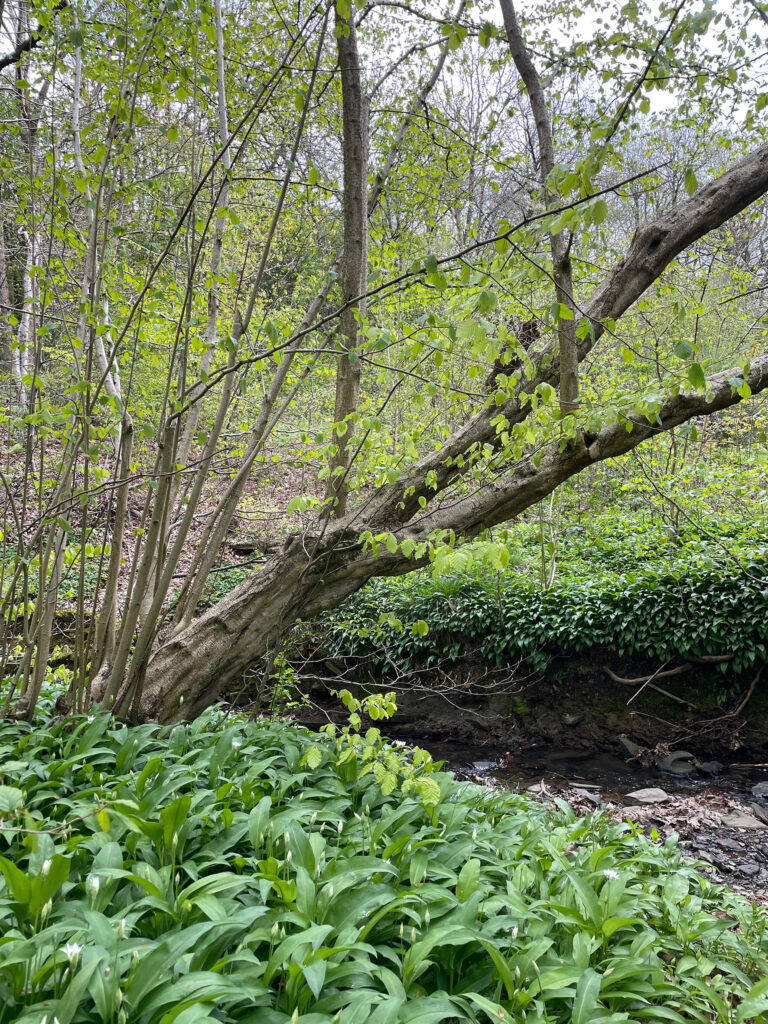
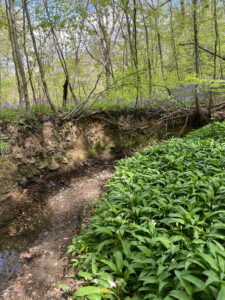
It is yet to be confirmed, by Sheffield City Council’s Parks and Countryside team, whether mature beech will be removed from this location. Nonetheless, selective thinning of beech saplings will take place around the edges of the riverbank. Again it is easy to see how bare the ground under the beech is in contrast with the opposite bank covered in wild garlic.
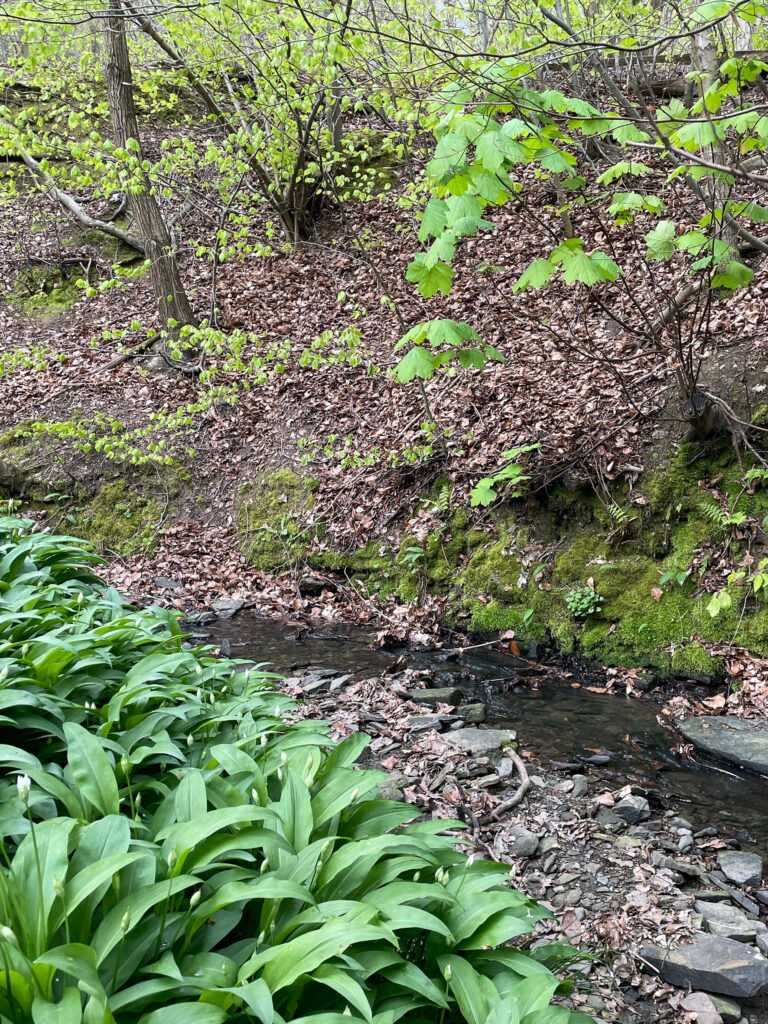
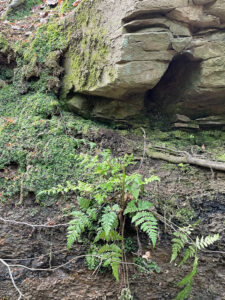
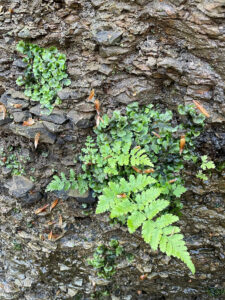
A previously coppiced hazel has been identified as needing a weight reduction, with the heaviest limb needing to be removed. This will avoid the risk of this fine example of a multistem hazel being uprooted by the wind. The river bank here is especially steep and is favoured by mosses, liverworts and broad buckler fern, Dryopteris dilatata. Selective thinning of beech and sycamore, Acer pseudoplatanus, will allow regeneration of both oak and ash, Fraxinus excelsior. The objective of the thinning is to leave a partially shaded and damp microclimate to increase the population of mosses, liverworts and ferns.
Grey wagtails are frequent here. As insect-eating birds, they stay close to aquatic habitats where insect numbers are high. Treecreepers are also regularly seen, climbing up and down mature trees, spiralling around trunks in search of insects to feast on. Mallard ducks are also found here.
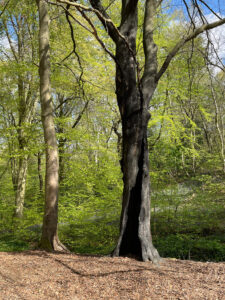
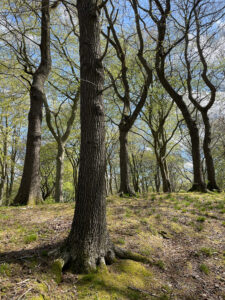
4) RW7 2a – stream corridor. Area of mature beech.
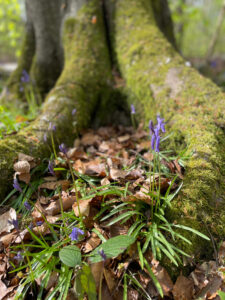
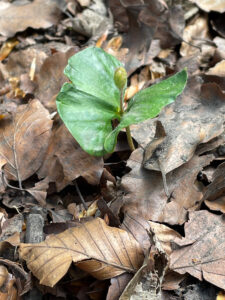
Bluebell patches endure here, under a canopy dominated by mature beech and saplings. There are also a number of beech tree seedlings in this area, and no oak regeneration. If left unmanaged, oak and other local trees would be forced out.
Selective removal of beech, likely including one tree that was deliberately set on fire, will allow the bluebells to slowly spread outwards, over the course of many decades, from these isolated clumps. The potential of which can be seen in the dense bluebell display on the opposite side of the riverbank, where thinning of beech took place approximately 10 years ago.
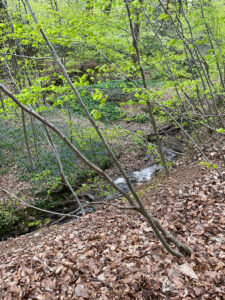
5a) RW7 2a – stream corridor. Below area of mature beech.
Directly below area 04, mosses, liverworts and ferns grow on the exposed sandstone and shale layers forming the riverbank. Groundwater seeps through the shale layer, providing a near constant source of moisture for the liverworts that can only thrive and reproduce in wet environments. Mosses grow on the sandstone upper reaches, where they prefer the drier conditions. Broad buckler fern adapts to both dry and wet soils and can exploit rocky crevices as easily as deeper woodland soils.
On the riverbanks the difference in soil moisture levels can be clearly seen by the distribution of English bluebells (drier soil) and wild garlic, (damper soil).
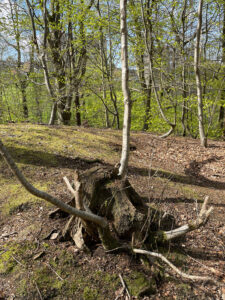
6) RW7 2b – central area (not on interim map). Area of oak regeneration on thin soil.
This area was historically used for charcoal and white coal production, with evidence of charcoal hearths and q-pits dotted around the landscape . Coppiced oak was used for charcoal making and a handful of ‘lapsed coppice’ oak stools remain in various states of health. These will be the oldest trees in this particular environment and some are all but disintegrating.
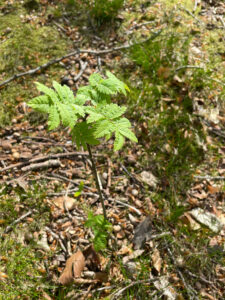
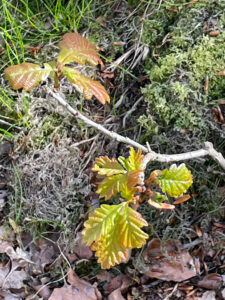
Oak saplings are found in significant numbers here, especially compared with other areas included within the survey. Rowan is also regenerating well here. Mature beech will be selectively removed and beech saplings will be cleared around the base of mature oaks to enable them to thrive.
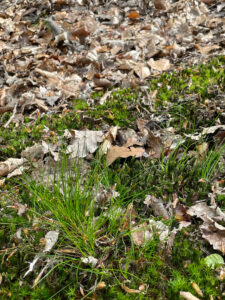
Soils were stripped during industrial charcoal and white coal making, exposing the acidic sandstone bedrock underneath. This means that the soils here are especially thin and acidic, conditions indicated by the presence of wavy hair grass, Deschampsia flexuosa, which grows well in this more extreme niche. It has potential to spread out from these limited patches.
Hair cap moss, Polytrichum commune, forms small patches that could eventually spread given the right conditions. It grows in open woodland, meaning it is compatible with oak and associated tree species but struggles in areas dominated by beech. Creeping soft grass, Holcus mollis, grows in well-drained acidic or neutral soils with oak and birch, and in other open woodlands.
Bluebells grow infrequently here, mainly on the edge of the few patches of bramble, Rubus fruticosus. Their capacity to recolonise the bare woodland floor is limited by the thinness of the soil layer, meaning that any recovery of the ground flora will be characterised by wavy hair grass, creeping soft grass and hair cap moss.
Funded by the European Union Horizon Europe Research and Innovation Programme under grant agreement 101181560.